Tag: neurodiversity

  • Understanding Neurodiversity: Embracing Unique Minds

    Understanding Neurodiversity: Embracing Unique Minds

    Definitions

    Neurodiversity is a growing concept started by the autistic community1 that acknowledges the natural differences in how individuals process and experience the world. The neurodiversity movement highlights that no two brains function the same, normalizing variations in neurology and psychology.2

    Within the neurodiversity framework, there are two subclassifications: neurotypical and neurodivergent.3

    Neurotypical refers to someone whose neurological experience falls within the average range of variability. It’s important to note that what constitutes “normal” brain functioning is subjective and influenced by societal and cultural expectations.

    Neurodivergent describes individuals who have a neurological condition or variation that significantly affects how they behave, process information, or experience the world. Neurodivergence may or may not pertain to a diagnosable condition or disability.

    Why is the terminology important?

    Some individuals who are not comfortable disclosing their conditions may choose to primarily identify as neurodivergent to express their need for accommodation and understanding while maintaining their privacy.

    Additionally, it is common for there to be co-occurring conditions wherein a person may identify as neurodivergent to encompass multiple impacting traits.2

    Examples of neurodivergence
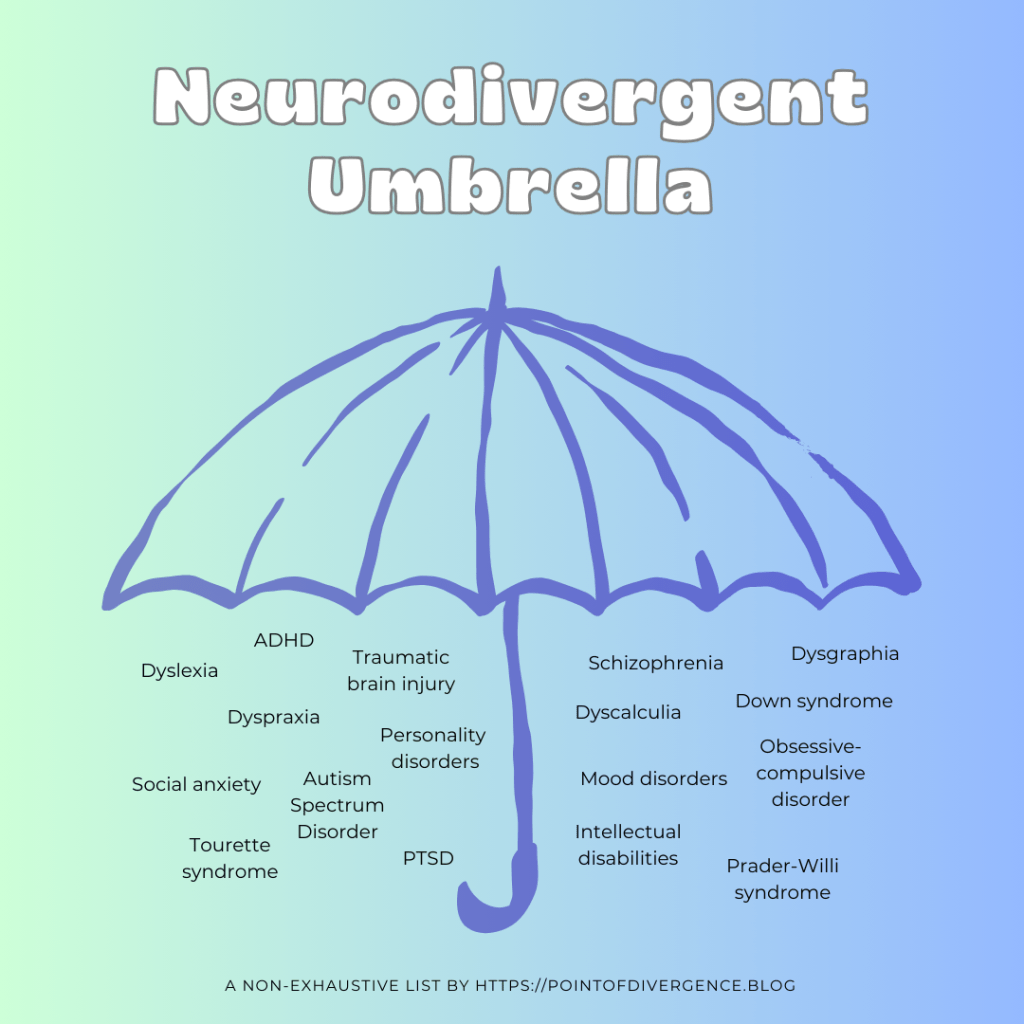
    A neurodivergent brain may demonstrate differences in functioning that impact the following:

    • Attention span
    • Short term and long term memory
    • Sensory processing
    • Planning and organizing
    • Emotional regulation
    • Cognitive flexibility
    • Creativity
    • Problem solving
    • Pattern recognition
    • Motivation

    Embracing neurodiversity

    When society is designed to support only one way of being, people are left behind. This exclusion can hinder social connection, limit access to basic needs, and negatively impact mental and physical well-being, as well as career stability and success.

    Embracing neurodiversity starts with awareness and acceptance.

    • Awareness requires actively listening to different perspectives and seeking educational experiences. This includes:
      • Listening to neurodivergent experiences
      • Reading about topics related to neurodiversity
      • Asking questions to understand neurodivergence
    • Acceptance means respecting neurodiverse needs, voices, and experiences. This includes:
      • Developing relationships with neurodivergent people
      • Supporting appropriate boundaries and self-advocacy
      • Including neurodivergent voices in decision-making
      • Adapting the environment to meet neurodiverse needs

    Just like the variations in our physical bodies, neurodiversity is a fundamental aspect of what makes life beautiful. Embracing neurodiversity allows each person to be unique and enhances our ability to love others for their individuality, as well as the connections we share.

    Note on disability

    It’s also important to acknowledge that acceptance of neurodiversity does not lessen the significance of any disability. Disabled individuals may face severe challenges in a world that is not, or cannot be, adapted to accommodate their condition. Emphasizing understanding, inclusion, and appropriate support is vital for enabling those with disabilities to engage safely in day to day life.

    References

    1. Monique Botha, Robert Chapman, Morénike Giwa Onaiwu, Steven K. Kapp, Abs Stannard Ashley, and Nick Walker, “The neurodiversity concept was developed collectively: An overdue correction on the origins of neurodiversity theory,” Autism 28, no. 6 (2024): 1591-1594. https://doi.org/10.1177/13623613241237871
    2. “Neurodiversity,” National Library of Medicine, accessed December 8th, 2025. https://www.nnlm.gov/reading-club/topic/331
    3. “Neurodivergent,” Cleveland Clinic, accessed December 8th, 2025. https://my.clevelandclinic.org/health/symptoms/23154-neurodivergent

  • My AuDHD Diagnosis: Everything and Nothing Changed

    My AuDHD Diagnosis: Everything and Nothing Changed

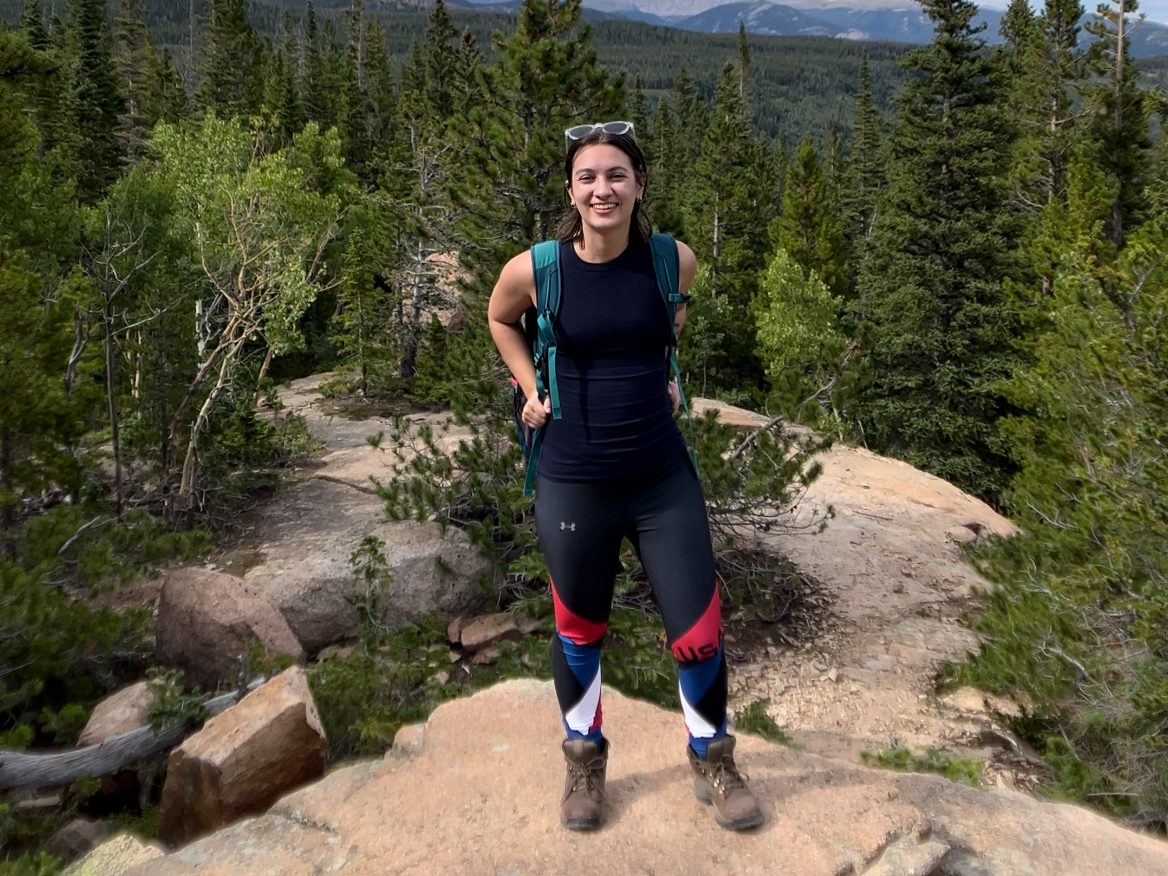
    Hello! My name is Sarah, and I’m writing this story with great uncertainty about the impact it will have on my life. This is the first time I am sharing my journey with autism and ADHD—often called AuDHD.

    Reaching my diagnosis was an arduous experience, and I hope that telling my story will make it easier for others to tell their own stories so they can be better understood and accepted.

    As a child, I could sleep for up to 14 hours and still wake up feeling tired. I was shy, socially nervous, and I held a lot of frustration inside myself. I picked at my skin when overwhelmed. My appetite was also minimal and inconsistent.

    The doctors ran all sorts of tests—blood work, ultrasounds, EKGs, and a stress test. The doctors seemed to run out of ideas, and they sent me on my way. My parents were trying to be supportive of my reported challenges, but what else could they do at that point?

    The hardest part wasn’t the lack of answers but the resulting doubt in my own reality. I learned the word hypochondriac on Google and started to believe that word described me.

    *Hypochondriac: “a person who continuously worries about their health without having any reason to do so.” Cambridge Dictionary. “Hypochondriac.” @CambridgeWords, 22 Oct. 2025, dictionary.cambridge.org/us/dictionary/english/hypochondriac. Accessed 23 Oct. 2025.

    Four years ago, I began working with children with developmental disabilities. The kids helped me understand and accept myself better. I started to wonder if I could be autistic.

    Initially, fear held me back—I feared that talking to a psychiatrist would lead to more dismissal. I frequently scheduled, rescheduled, and canceled appointments, oscillating between certainty and doubt that my challenges were worth addressing.

    During a routine check up, a new physician was reviewing my medical history. She asked me if my history of anxiety had been fully addressed. She was the first doctor that had ever cared to talk to me about my medical history instead of just reading the charts. I told the doctor, “I don’t think that my anxiety is just anxiety.” Without further questions, she provided a psychiatric referral.

    Within 15 minutes of my first appointment with a psychiatrist, I was recommended an evaluation for autism spectrum disorder. After receiving the results of the assessment (Autism and ADHD) it felt like everything and nothing changed.

    The symptoms stumping many doctors finally made sense, reframed as hypersensitivity, sensory aversions, autistic burnout, and resistance to change and transitions.

    If I chose to never tell anyone about the news, no one would be the wiser. But I had already spent most of my life trying to stretch myself to fit into a box that felt impossible to fill. Instead, I began a journey of embracing my neurodivergence, advocating for acceptance as I am, and learning from the greater neurodivergent community.

    As I started sharing my diagnosis with close friends and colleagues, many opened up with questions regarding their neurotypes. A common question that stemmed was, “What’s the point of getting assessed as an adult?” 

    For me personally, a diagnosis provided a single answer to many questions I have asked about myself. But that is just what my path was, and everyone’s path is unique.

    To anyone contemplating the value of an assessment or diagnosis, I want to emphasize that your feelings and struggles are valid. Regardless of your path—whether you pursue a diagnosis or not—know that you deserve support and acceptance as you are.